---
title: Technology
---
[Skip to content](https://bioh2.ai/technology#main-content)
[](https://bioh2.ai/?hsLang=en)
- [Technology](https://bioh2.ai/technology)
- [Solutions](https://bioh2.ai/solutions)
- [About Us](https://bioh2.ai/about-us)
- [Insights](https://bioh2.ai/insights)
- [Contact Us](https://bioh2.ai/contact)
- [Technology](https://bioh2.ai/technology)
- [Solutions](https://bioh2.ai/solutions)
- [About Us](https://bioh2.ai/about-us)
- [Insights](https://bioh2.ai/insights)
- [Contact Us](https://bioh2.ai/contact)


English
- [English](https://bioh2.ai/technology)
- [Chinese - Simplified](https://bioh2.ai/zh-cn/technology)
[Contact](https://bioh2.ai/contact?hsLang=en#contact)
The Heat Barrier
# 180°C *vs.* 700°C
Our proprietary catalyst drives hydrogen production at just **180°C** and **3 MPa** — over **500°C lower** than traditional industry standards.
> 40% energy saved
Low pressure · 3 MPa
[Inquire for a Pilot Project](https://bioh2.ai/contact?hsLang=en)
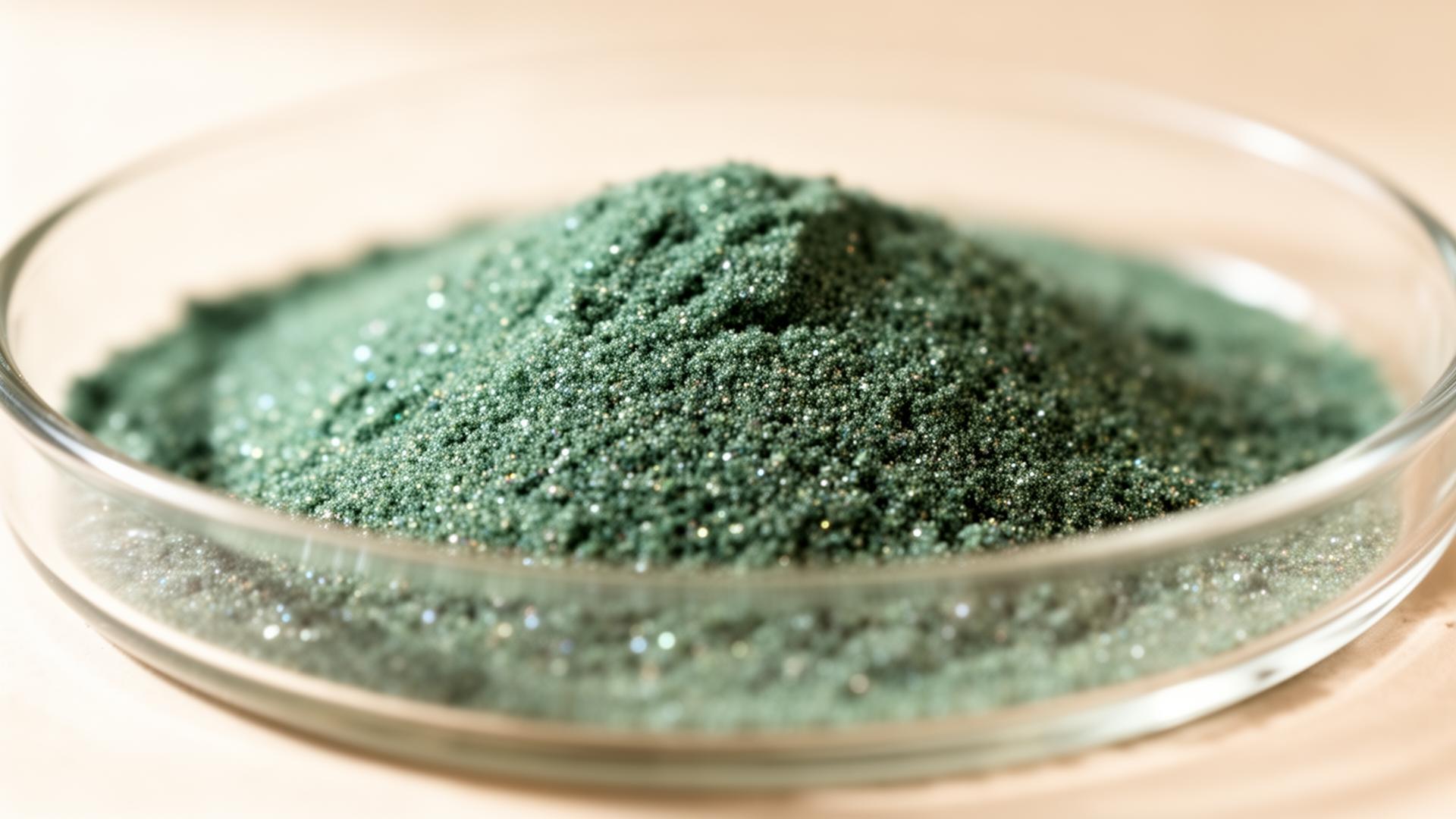
Process Flow
## The Two-Step Method
.png)
01
### Homogenization
Mixed biowaste — food, paper, plastics — is blended with the BioH2 catalyst.
→

02
### Catalytic Reforming
Precision reaction at low temperature (180°C) and low pressure (3 MPa).
→

03
### Hydrogen Output
High-purity Green Hydrogen for fuel cells and industrial use.
[See Real-World Applications →](https://bioh2.ai/solutions?hsLang=en#solutions1)
FACT SHEET
## Side-by-Side with Traditional Tech
| Performance Metric | Traditional Tech | BioH2 Tech |
| --- | --- | --- |
| Production Cost | $5 – $6 / kg | ~$0.90 / kg |
| Hydrogen Yield | 100 – 200 L/kg | 400 – 600 L/kg |
| CO₂ Emissions | 8 – 18 kg | 1.5 – 1.8 kg |
| System Pressure | ~220 bar | < 30 bar |
[View Commercial Roadmap →](https://bioh2.ai/solutions?hsLang=en#solutions2)
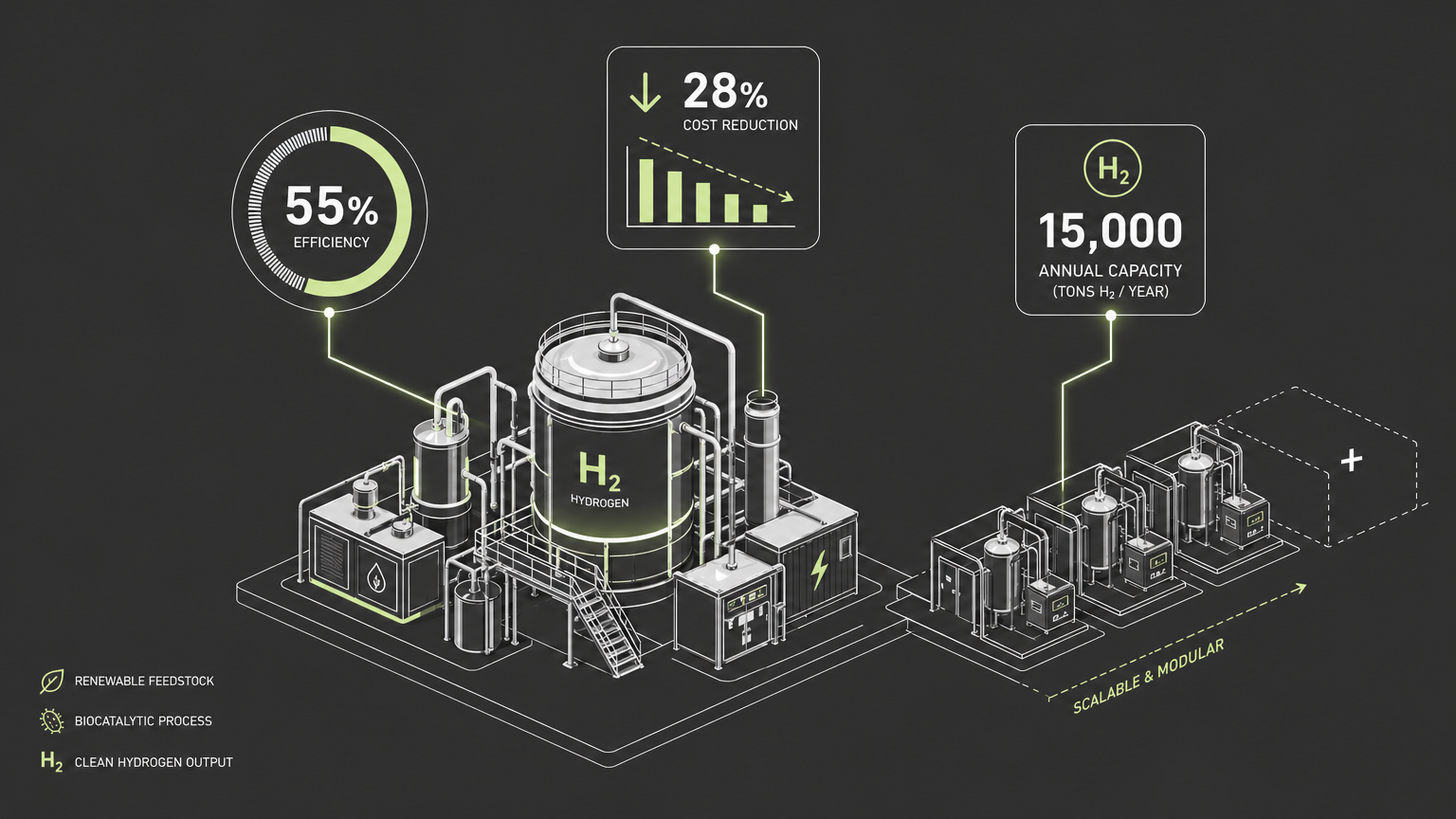
Scalability & Efficiency
## Built for Industrial Scale
55%
System Efficiency
Achieved when coupled with fuel cell systems — among the highest in industry.
28%
Cost Savings
Lower energy cost compared to traditional diesel generators.
15,000
Tons / Year
Annual project capacity — capable of fueling 10 hydrogen refueling stations.
backed by excellenc





FAQ
## Frequently Asked Questions
###### How does BioH2 achieve Hydrogen production at only 180°C?
We will begin in this chapter by dealing with some general quantum mechanical ideas. Some of the statements will be quite precise, others only partially precise. It will be hard to tell you as we go along which is which, but by the time you have finished the rest of the book, you will understand in looking back which parts hold up and which parts were only explained roughly.
###### What is the purity of the hydrogen produced?
We will begin in this chapter by dealing with some general quantum mechanical ideas. Some of the statements will be quite precise, others only partially precise. It will be hard to tell you as we go along which is which, but by the time you have finished the rest of the book, you will understand in looking back which parts hold up and which parts were only explained roughly.
###### Can the system handle unsorted municipal waste?
We will begin in this chapter by dealing with some general quantum mechanical ideas. Some of the statements will be quite precise, others only partially precise. It will be hard to tell you as we go along which is which, but by the time you have finished the rest of the book, you will understand in looking back which parts hold up and which parts were only explained roughly.
###### Is the catalyst consumed during the process?
We will begin in this chapter by dealing with some general quantum mechanical ideas. Some of the statements will be quite precise, others only partially precise. It will be hard to tell you as we go along which is which, but by the time you have finished the rest of the book, you will understand in looking back which parts hold up and which parts were only explained roughly.
###### What happens to the Carbon Dioxide generated?
We will begin in this chapter by dealing with some general quantum mechanical ideas. Some of the statements will be quite precise, others only partially precise. It will be hard to tell you as we go along which is which, but by the time you have finished the rest of the book, you will understand in looking back which parts hold up and which parts were only explained roughly.
[](https://bioh2.ai/?hsLang=en)
Transforming biowaste into clean hydrogen — powering a net-zero future from Hong Kong to the world.
### Get In Touch
Hong Kong (R&D HQ)
Room RRS 816, Sir Run Run Shaw Building, 224 Waterloo Road, Kowloon Tong, HK
Shenzhen (Innovation Center)
Room 501, Building 13, North District, Qianhai Shenzhen-HK Youth Dream Factory, 5188 Menghai Ave, Nanshan District
###### Follow Us
Linkedin
WeChat
Scan QR Code to Contect with us by WeChat

© 2026 BIOH2 TECH LTD. All Rights Reserved.
[Privacy Policy |](https://bioh2.ai/privacy-policy?hsLang=en) [Terms & Condition](https://bioh2.ai/terms-conditions?hsLang=en)