---
title: 低温催化制氢技术 | BioH2 Tech
description: 了解 BioH2 Tech 的专有低温催化重整技术,如何在 180°C、3 MPa 条件下将混合生物质废弃物转化为高纯度绿氢,降低能耗并支持模块化工业部署。
---
[Skip to content](https://bioh2.ai/zh-cn/technology#main-content)
[](https://bioh2.ai/?hsLang=zh-cn)
- [技术规格](https://bioh2.ai/zh-cn/technology)
- [解决方案](https://bioh2.ai/zh-cn/solutions)
- [关于我们](https://bioh2.ai/zh-cn/about-us)
- [行业洞察](https://bioh2.ai/zh-cn/insights)
- [联系方式](https://bioh2.ai/zh-cn/contact)
- [技术规格](https://bioh2.ai/zh-cn/technology)
- [解决方案](https://bioh2.ai/zh-cn/solutions)
- [关于我们](https://bioh2.ai/zh-cn/about-us)
- [行业洞察](https://bioh2.ai/zh-cn/insights)
- [联系方式](https://bioh2.ai/zh-cn/contact)


简体中文
- [简体中文](https://bioh2.ai/zh-cn/technology)
- [英语](https://bioh2.ai/technology)
[联系我们](https://bioh2.ai/contact?hsLang=zh-cn#contact)
突破温度壁垒
# 180°C *vs.* 700°C
我们的专利催化剂在 **180°C** 和
**3 MPa** 的条件下即可实现制氢
—比传统行业标准低至少 **500°C**
节省能耗 > 40%
低压运行 · 3 MPa
[申请试点项目合作](https://bioh2.ai/zh-cn/contact?hsLang=zh-cn)
工艺流程
## 两步法
.png)
01
### 均质化
将混合生物质废弃物(厨余、废纸、塑料)与 BioH2 催化剂进行均匀混合。
→

02
### 催化重整
在低温(180°C)和低压(3 MPa)下进行精密重整反应。
→

03
### 氢气输出
产出高纯度绿氢,用于燃料电池和工业领域。
[查看实际应用案例 →](https://bioh2.ai/solutions?hsLang=zh-cn#solutions1)
核心数据看板
## 全方位对照传统技术
| 性能指标 | 传统技术 | BioH2 技术 |
| --- | --- | --- |
| 生产成本 | $5 – $6 / kg | ~$0.90 / kg |
| 产氢效率 | 100 – 200 L/kg | 400 – 600 L/kg |
| CO₂ 碳排放 | 8 – 18 kg | 1.5 – 1.8 kg |
| 系统运行压力 | ~220 bar | < 30 bar |
[查看商业化路线图 →](https://bioh2.ai/solutions?hsLang=zh-cn#solutions2)
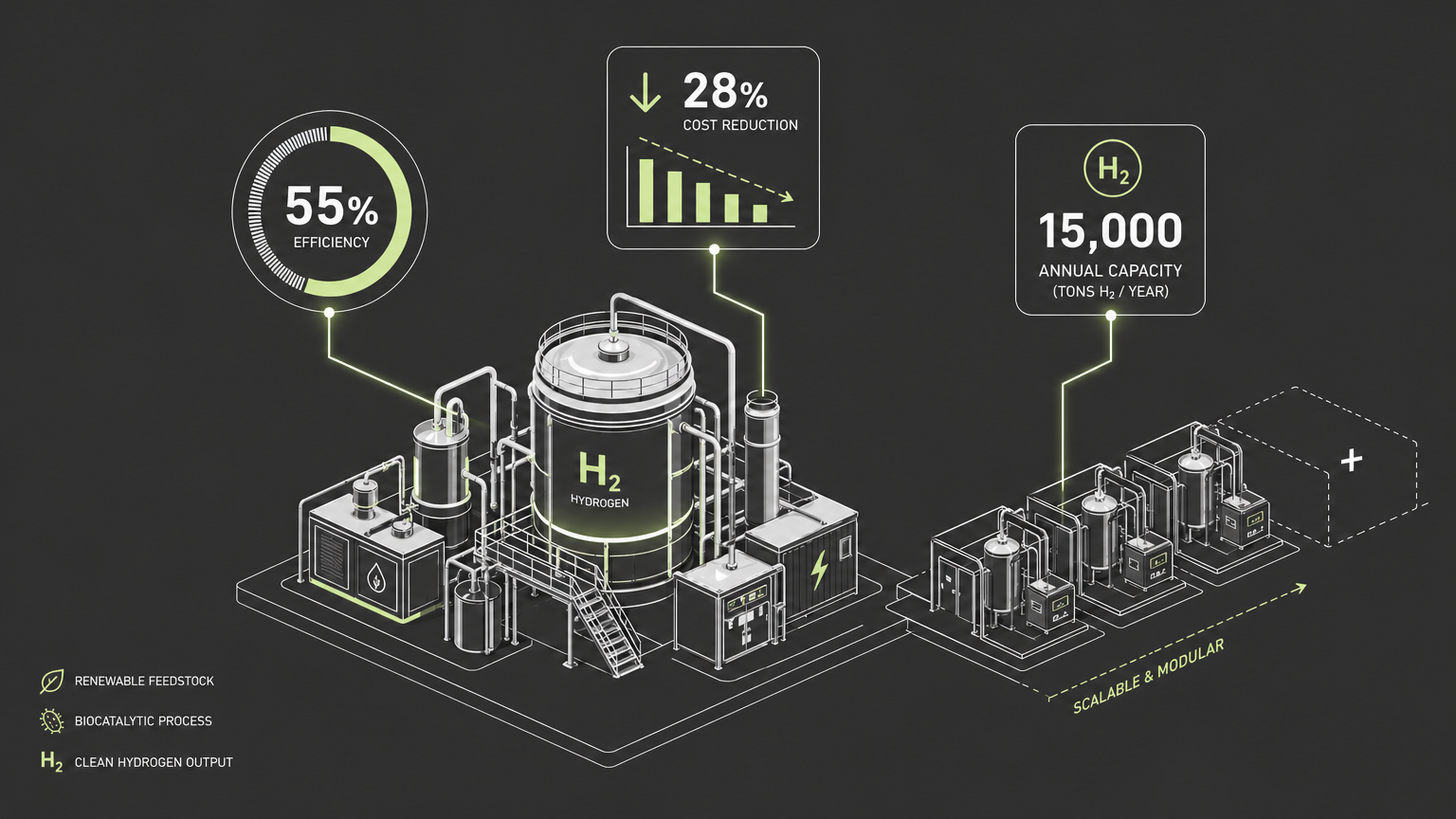
可扩展性与效率
## 专为工业规模打造
55%
效率提升
通过与燃料电池系统协同运行,系统效率可达行业顶尖
28%
成本节约
运行成本显著低于传统柴油发电机
15,000 t
年度产能
可满足 10 个加氢站的用氢需求
凝聚杰出科研实力





FAQ
## 常见问题解答
###### BioH2 是如何在仅 180°C 的低温下实现高效制氢的?
We will begin in this chapter by dealing with some general quantum mechanical ideas. Some of the statements will be quite precise, others only partially precise. It will be hard to tell you as we go along which is which, but by the time you have finished the rest of the book, you will understand in looking back which parts hold up and which parts were only explained roughly.
###### 产出的氢气纯度是多少?
We will begin in this chapter by dealing with some general quantum mechanical ideas. Some of the statements will be quite precise, others only partially precise. It will be hard to tell you as we go along which is which, but by the time you have finished the rest of the book, you will understand in looking back which parts hold up and which parts were only explained roughly.
###### 该系统是否可以处理未经分类的城市生活垃圾?
We will begin in this chapter by dealing with some general quantum mechanical ideas. Some of the statements will be quite precise, others only partially precise. It will be hard to tell you as we go along which is which, but by the time you have finished the rest of the book, you will understand in looking back which parts hold up and which parts were only explained roughly.
###### 在制氢过程中,催化剂是否会被消耗?
We will begin in this chapter by dealing with some general quantum mechanical ideas. Some of the statements will be quite precise, others only partially precise. It will be hard to tell you as we go along which is which, but by the time you have finished the rest of the book, you will understand in looking back which parts hold up and which parts were only explained roughly.
###### 反应中产生的二氧化碳(CO₂)是如何处理的?
We will begin in this chapter by dealing with some general quantum mechanical ideas. Some of the statements will be quite precise, others only partially precise. It will be hard to tell you as we go along which is which, but by the time you have finished the rest of the book, you will understand in looking back which parts hold up and which parts were only explained roughly.
[](https://bioh2.ai/?hsLang=zh-cn)
将生物质废弃物转化为清洁氢能——从香港走向世界,助力实现净零未来。
### 取得联系
香港 (研发总部) | 香港九龙塘窝打老道224号 邵逸夫大楼 RRS 816 室
深圳 (创新中心) | 深圳市南山区梦海大道5188号 前海深港青年梦工场北区13号楼501室
###### 关注我们
领英
微信
微信二维码

© 2026 BIOH2 TECH LTD. 保留所有权利。
[隐私政策 |](https://bioh2.ai/zh-cn/privacy-policy?hsLang=zh-cn) [条款与条件](https://bioh2.ai/zh-cn/terms-conditions?hsLang=zh-cn)