Skip to content
menu-toggle
menu-close
HKBU Deep Tech Spin-Off

Green Hydrogen Production:
The Revolutionary
Catalyst.

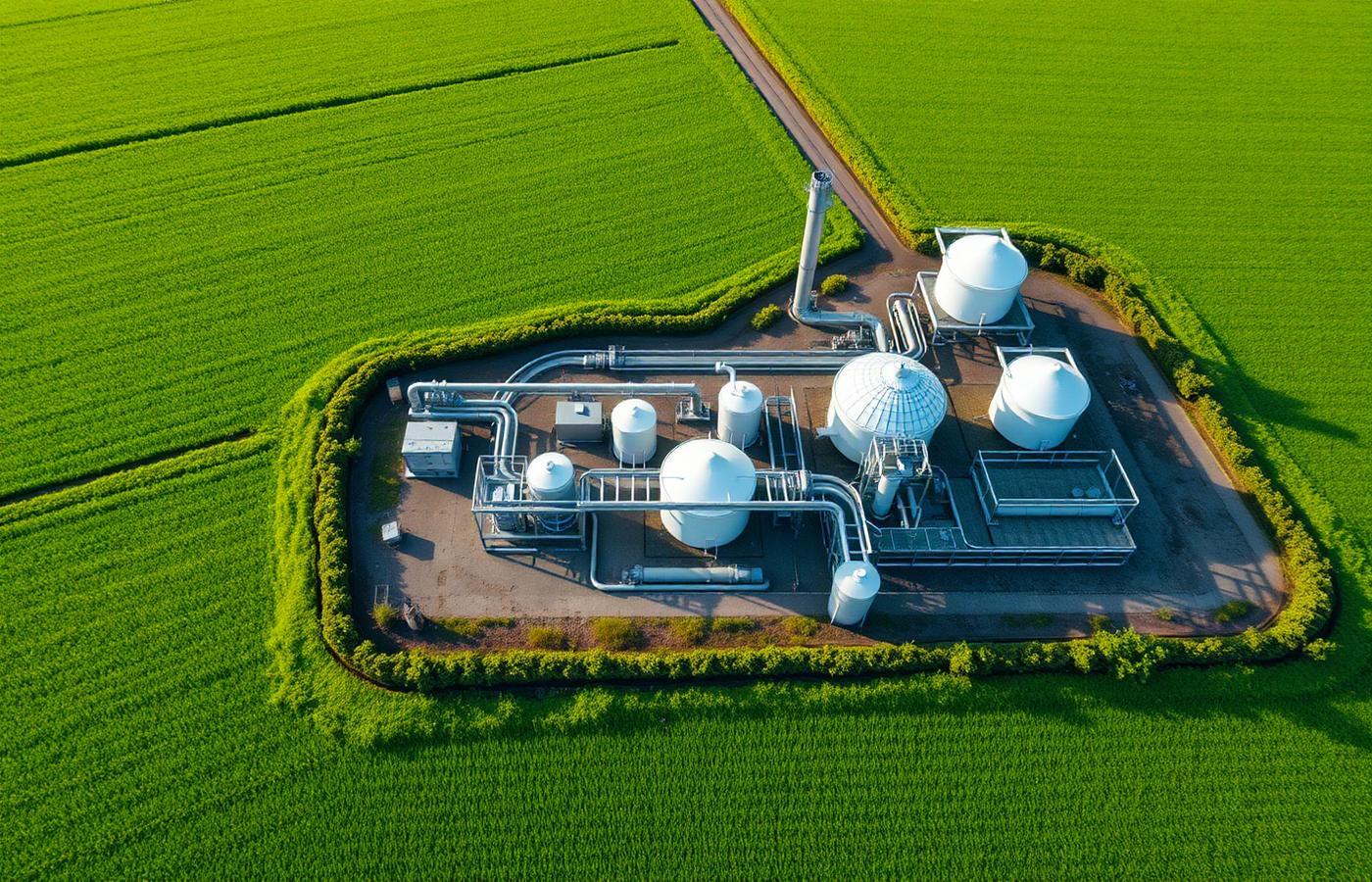
An HKBU-incubated Deep Tech startup driving Waste-to-Hydrogen (W2H) via Biomass Catalytic Reforming, transforming global biowaste into high-purity hydrogen at a fraction of the cost. 
View Technology
hero-bg

WATCH

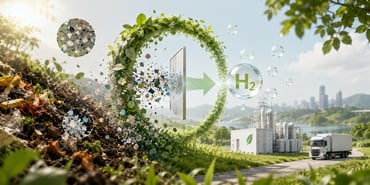
Transforming Waste-to-Hydrogen(W2H)

Our Foundation

The Scientific Pedigree — Our Moat

Incubated by HKBU
A spin-off from the Faculty of Science, bridging the gap between world-class research laboratories and industrial-scale hydrogen production.
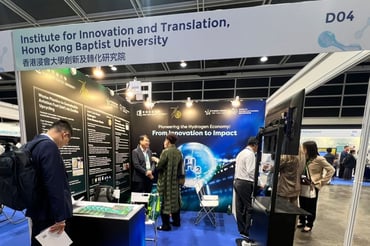
JUMPSTARTER 2025
Global Top 30 Innovative Startup
Selected from thousands of applicants worldwide as one of the top 30 most innovative startups at JUMPSTARTER 2025.
World's Top 2% Scientist
Led by Prof. Zhao Jun, HKBU
Director of the Applied Research Centre for Pearl River Delta Environment. Ranked among the world's Top 2% Scientists by Stanford University. Recipient of global awards from Inventions Geneva and IIFME — the scientific foundation behind BioH2 Tech's breakthrough catalyst.

Real-World Solutions

Market Applications

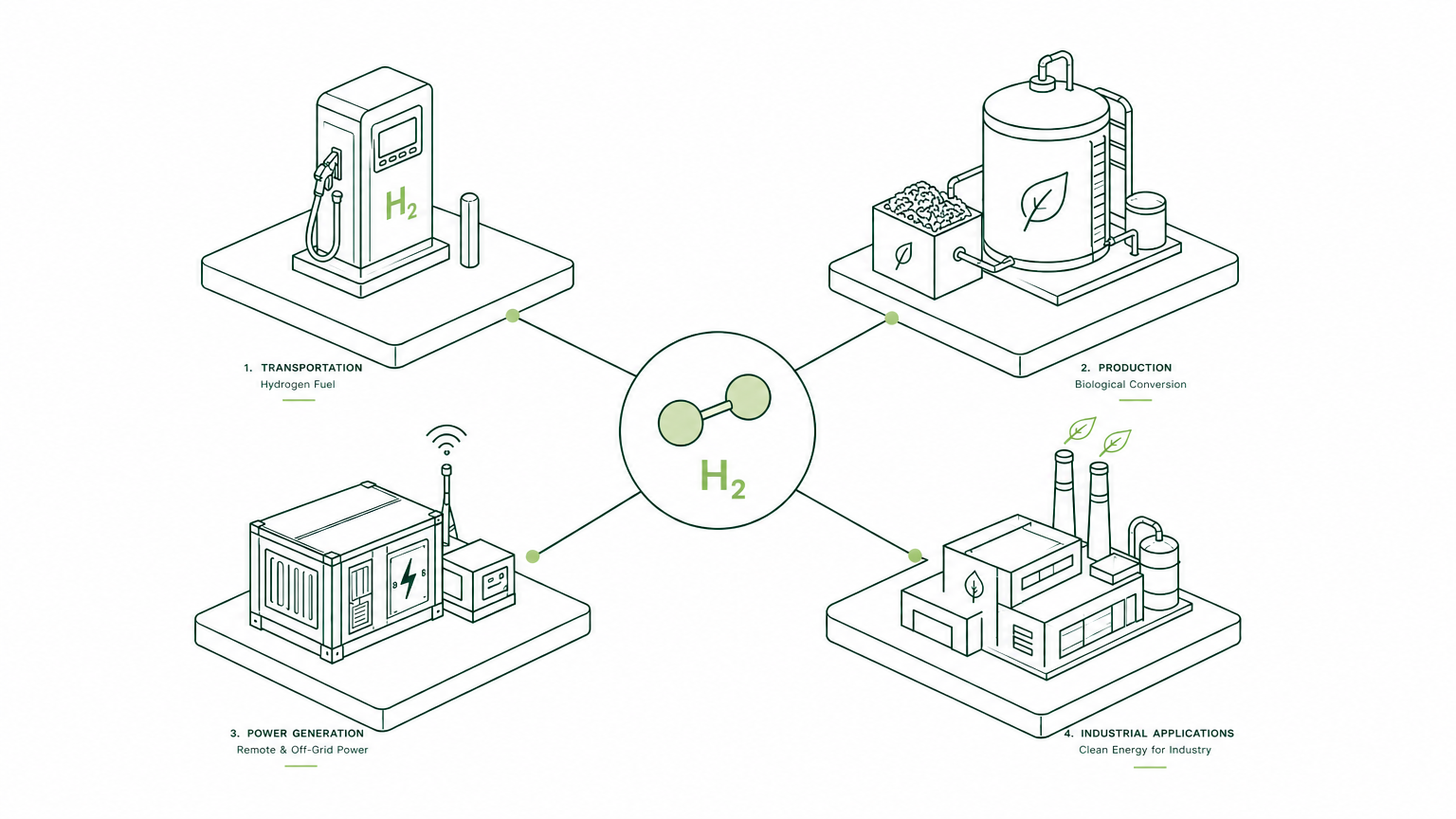
10 Stations
Hydrogen Refueling

A 15,000-ton/year project can fuel 10 hydrogen refueling stations — powering the clean mobility transition.

600 m³/t
High-Yield Mixed Biowaste Hydrogen

1 ton of biowaste produces 600 m³ of hydrogen — unlocking waste streams as a profitable energy feedstock.

−28% Cost
Remote Power Generation

Modular 200 Nm³/h units deliver 28% lower cost than diesel — ideal for off-grid and remote industrial sites.

High-Purity H₂
Industrial Decarbonization

High-purity H₂ for chemical and metal production — a complete decarbonization solution to meet "Dual Carbon" goals.

The Breakthrough

Performance Benchmarks

Metric BioH2 Tech (W2H) SMR (Natural Gas) Electrolysis (Green)
Production Cost (USD/kg H₂) $0.9 – 3.3 $1.5 – 3.0 $3.0 – 8.0
Carbon Footprint Near-zero + waste valorisation High (10–12 kg CO₂/kg H₂) Near-zero (if renewable)
Feedstock Biowaste (free / tipping fee) Natural gas (fossil) Water + Electricity
Operating Temperature < 200°C 800 – 1000°C Room temperature
H₂ Yield per Tonne Feedstock ~60 kg (from biowaste) ~90 kg ~111 kg (per 1000 kWh)
Circular Economy Value Diverts 3,500 t/day HK food waste None None
CO₂ by-product per kg H₂ 1.5 – 1.8 kg (net negative with biogenic C) 8 – 18 kg ~0 kg

MARKET TRACTION & MEDIA

In the Press & On Stage

Untitled-13

"HKBU develops waste-to-hydrogen technology for circular economy."

Untitled-12

"Patented catalyst supports Hong Kong’s carbon neutrality goals."

Untitled-1

"BioH2 Tech leads in green energy innovation."

backed by excellenc

COMMERCIAL ROADMAP

Scaling to Industrial Impact

 
2026

Pilot System Launch

Launch of 1-Ton daily capacity pilot system — validating the technology at commercial scale with real-world biowaste streams.

2028

Scale-Up Phase

Scaling to 5-Ton daily capacity, establishing regional partnerships and supply agreements across the Greater Bay Area.

2030

Industrial Scale

100-Ton daily capacity operation across multiple facilities, delivering measurable decarbonization at city scale.

$5.1M+ Revenue

THE FUTURE OF CLEAN ENERGY

News, research, and updates from the leading edge of bio-hydrogen innovation

Beyond the Lab: Why 1 BioH2 Tech was Named a JUMPSTARTER 2025 Global Top 30 Startup
By BioH2

The global transition to a hydrogen economy is no longer a theoretical debate—it is a race for...

read more
The $180^{\circ}C$ Revolution: Why Temperature is the Biggest Barrier to Affordable Green Hydrogen
By BioH2

In the global race toward a hydrogen economy, the conversation usually centers on two things: color...

read more
Beyond the Lab: Why BioH2 Tech was Named a JUMPSTARTER 2025 Global Top 30 Startup (Clone)
By BioH2

The global transition to a hydrogen economy is no longer a theoretical debate—it is a race for...

read more