


How BioH2.ai Bypasses High-Heat Pyrolysis to Achieve a Market Price Target of US$1.5 to US$1.8 per kg.
As Hong Kong accelerates its transition toward sustainable energy with 37 active hydrogen trial projects, a significant commercial hurdle remains: the "Green Premium." Conventional techno-economic models show that converting organic waste and plastics through standard high-heat gasification (ranging from 800°C to 1,200°C) often results in levelized costs that cannot compete with fossil fuels. The primary culprits are the massive energy inputs required and the prohibitive maintenance costs associated with extreme temperatures.
The proprietary modular systems developed through technology introduce a fundamentally different financial paradigm. By lowering the operating threshold to a mild 180°C to 200°C spectrum, we are effectively rewriting the economics of green hydrogen production across the Greater Bay Area (GBA).
1. Breaking the Parasitic Energy Loop
Most waste-to-energy frameworks suffer from a "parasitic energy loop," where the facility consumes nearly as much electricity as it produces in chemical energy just to keep its reactors at operational temperatures. Furthermore, these extreme environments necessitate the use of exotic, heat-resistant alloys, which inflates capital expenditures (CAPEX) and makes modular deployment financially unfeasible.
By contrast, our catalytic process operates at a base of 180°C, utilizing standard industrial infrastructure that is both scalable and cost-effective. As detailed in our technology breakdown, this low-temperature approach minimizes thermal loss and enables seamless integration with low-grade industrial waste heat. By drastically reducing energy consumption during the reforming phase, we maintain an asset-light structure capable of hitting a target production cost of US$1.5 to US$1.8 per kg of H₂.
2. Eliminating the Sourcing Tax
Beyond pure thermal efficiency, our model eliminates the high logistics costs usually associated with feedstock preparation. While most competitors require expensive sorting to secure pristine biomass, our university-backed catalyst is designed to process complex municipal solid waste and mixed polymers without pre-treatment.
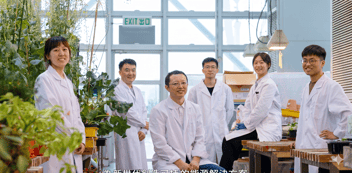
This breakthrough was recently highlighted by the HKBU Institute of Innovation and Talent (IIT) in their official project milestone. By handling urban digestates and plastics simultaneously, we remove the need for feedstock sorting entirely—a capability integrated into all of our solutions. This foundation, built on Professor Zhao’s academic rigour and institutional validation, is further explored on our About Us page.
Related Insights
The Thermodynamic Advantage—Why 180°C is the New Global Benchmark
Discover how BioH2.ai's low-temperature catalytic process reduces energy demand while enabling safer and more efficient hydrogen production.
Conquering the "High-Heat" Safety Barrier: The Regulator-Friendly Hydrogen Solution
Learn how BioH2.ai aligns with Hong Kong's evolving hydrogen regulations through inherently safer low-temperature operations.
Waste as Wealth: Turning Landfill Liabilities into Clean Energy Assets
Explore how difficult waste streams can be transformed into valuable hydrogen resources while reducing disposal costs and environmental burdens.
Stop paying the premium for clean energy.
Deploy an economically viable, university-backed waste-to-resource solution before the market shifts. Connect with our engineering and finance teams today to review our technical whitepaper and request a commercial site evaluation.
Request a CommercialLevelized Cost Evaluation